
Control Units for Rubber Expansion Joints – Design, Selection & Advantages
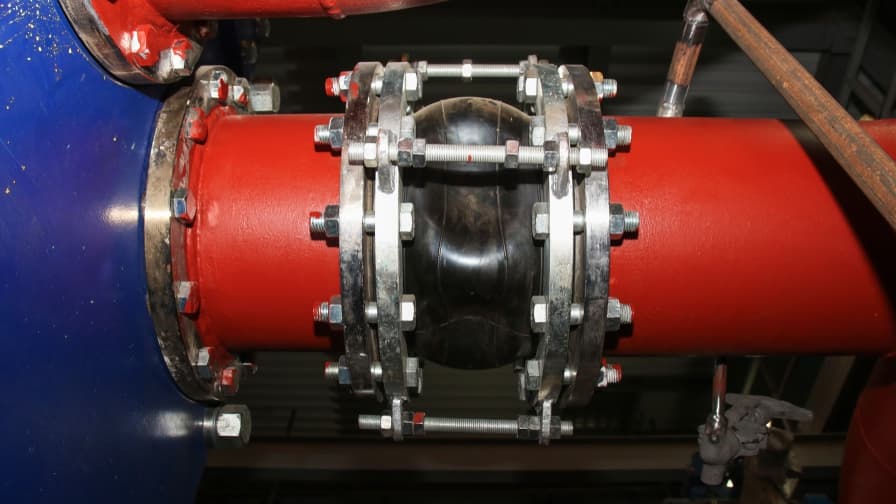
Control Units for Rubber Expansion Joints – Design, Selection & Advantages
Introduction
Rubber expansion joints are vital components in pipelines, absorbing vibration, compensating for thermal expansion, and correcting misalignment. However, in high-stress applications, uncontrolled movement can damage the joint or connected equipment. This is where Control Units come into play. At SHROFF Process Products, under the Bhartiflex brand, we design and manufacture robust control units that ensure safe, reliable performance of rubber expansion joints and bellows.
What Are Control Units?
Control units are external hardware assemblies—typically tie rods, limit rods, or compression hardware—installed alongside rubber expansion joints.
- Purpose: Restrict excessive axial, lateral, or angular movement.
- Function: Prevent over-extension or compression beyond design limits.
- Design: Steel rods with washers, nuts, and gusset plates, engineered to absorb load and protect the joint.
Design Considerations
When designing control units for Bhartiflex expansion joints:
- Rod Material: High-strength carbon steel or stainless steel for corrosion resistance.
- Rod Diameter: Sized to withstand maximum thrust forces.
- Anchor Plates: Designed to distribute load evenly across the flange.
- Configuration: Single-rod, double-rod, or multiple-rod systems depending on pipeline size and movement.
- Safety Factor: Always designed with margin to handle unexpected surges or water hammer.
Selection Guidelines
Choosing the right control unit depends on:
- Pipeline Size: Larger diameters require multiple rods for stability.
- Operating Pressure: Higher pressures demand stronger rods and anchoring.
- Movement Type:
- Axial restraint → Tie rods
- Lateral restraint → Limit rods
- Angular restraint → Hinged units
- Application Environment: Chemical plants, power stations, marine systems may require stainless steel or coated assemblies.
Advantages of Control Units
- Enhanced Safety: Prevents catastrophic failure due to over-movement.
- Extended Service Life: Protects the rubber joint from overstress.
- Cost Savings: Reduces downtime and replacement costs.
- Versatility: Adaptable to different pipeline layouts and stress conditions.
- Compliance: Meets international standards for pipeline safety.
Bhartiflex Manufacturing Excellence
- Customization: Control units tailored for NB sizes up to 2800 mm.
- Testing: Hydrostatic, thrust load, and fatigue testing ensure reliability.
- Integration: Designed to work seamlessly with Bhartiflex hand-built bellows and expansion joints.
- Applications: Widely used in Oil & Petrochemicals plant in the Middle East, NTPC power plants, Tata Steel, BHEL projects, and chemical industries worldwide.
Conclusion
Control units are not optional—they are essential safeguards for rubber expansion joints in demanding industrial environments. With Bhartiflex by SHROFF Process Products, customers get precision-engineered control units that guarantee safety, durability, and performance across diverse applications.
Related Articles
Rubber Expansion Joints & Bellows: The Bhartiflex Advantage
Discover how Bhartiflex hand-built rubber expansion joints and bellows deliver unmatched performance in heavy-duty industrial applications across power plants, steel mills, and chemical industries.
Selecting the Right Rubber for Expansion Bellows – The Bhartiflex Approach
Discover how proper rubber material selection—from EPDM to Neoprene to Nitrile—ensures optimal performance, durability, and chemical compatibility for your expansion bellows.
Procurement Tips for Rubber Expansion Joints & Bellows
Essential procurement guidelines for sourcing rubber expansion joints and bellows—from defining specifications to evaluating vendor capabilities and planning logistics.